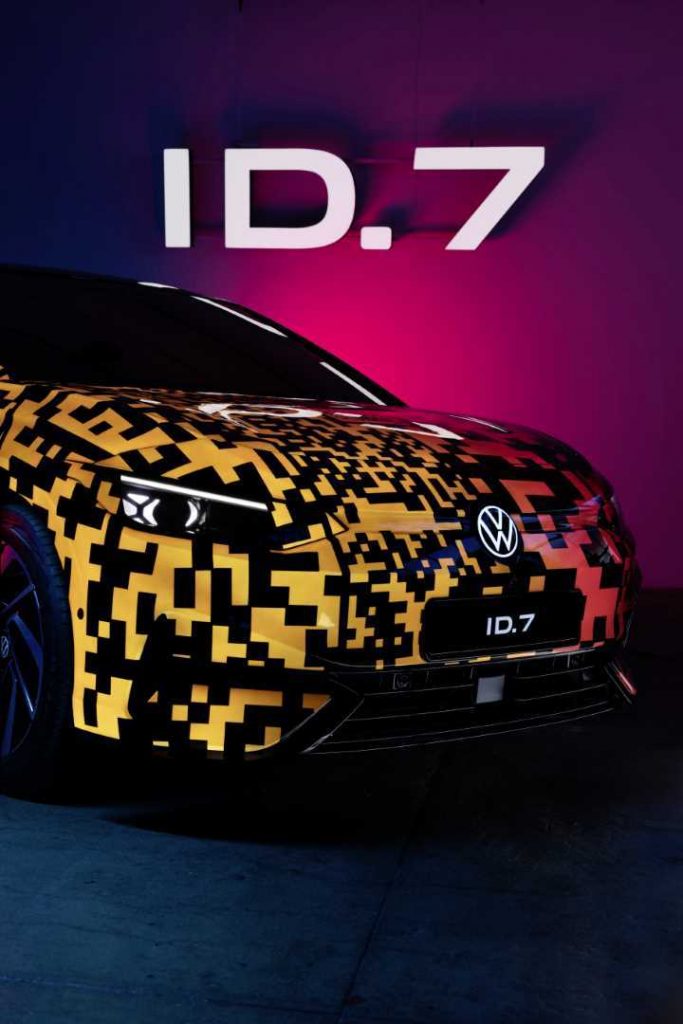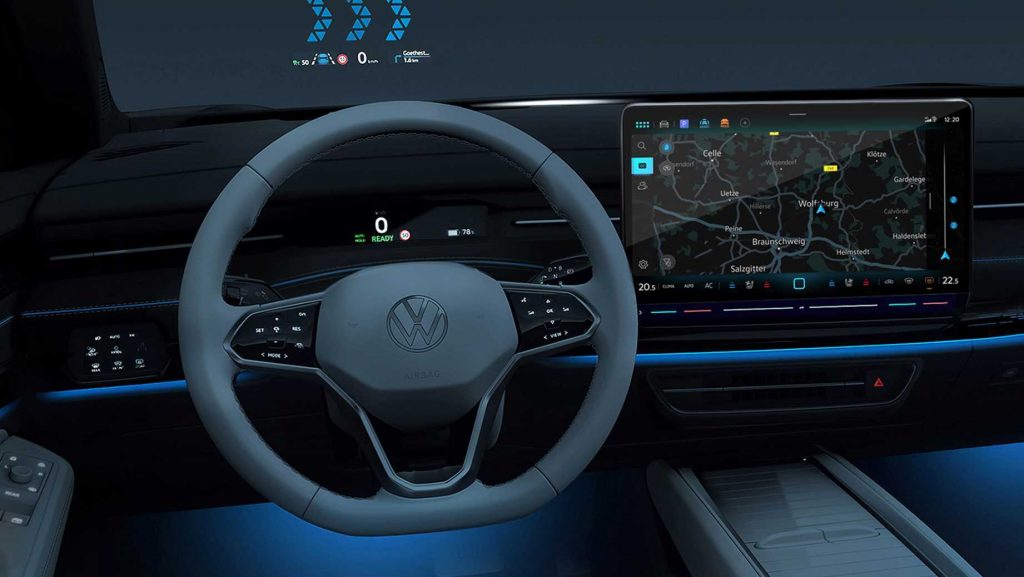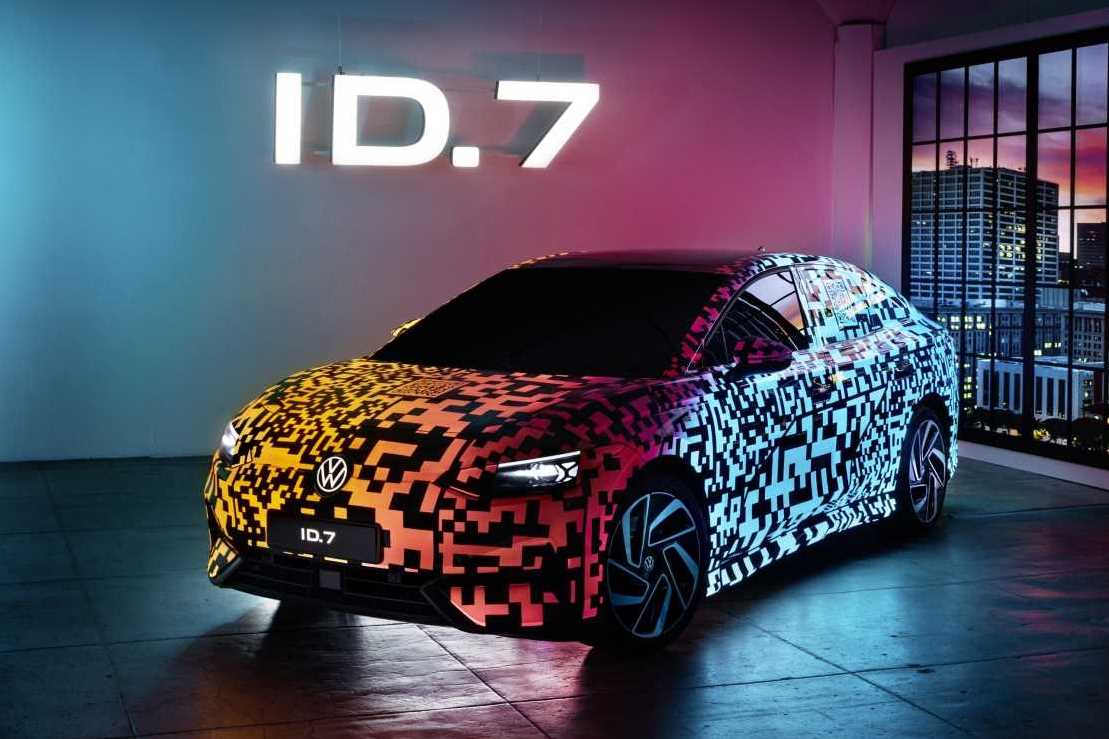
Volkswagen announced will be pulling the covers off of its all-electric ID.7 sedan during this year’s Consumer Electronics Show in Las Vegas.
Built on zee German carmaker’s modular drive matrix (MEB), it will be the sixth model in the company’s electric vehicle ID family and the second global car to be based on the MEB after the ID.4.
The ID.7 comes after the ID.3, ID.4, ID.5 and ID.6 (China-market only) models as well as the new ID. Buzz.
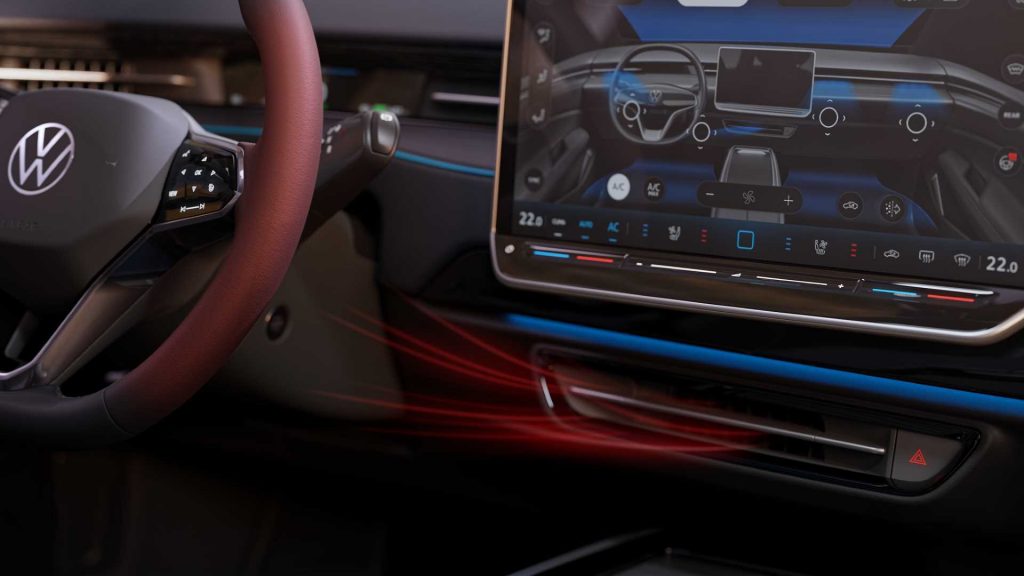
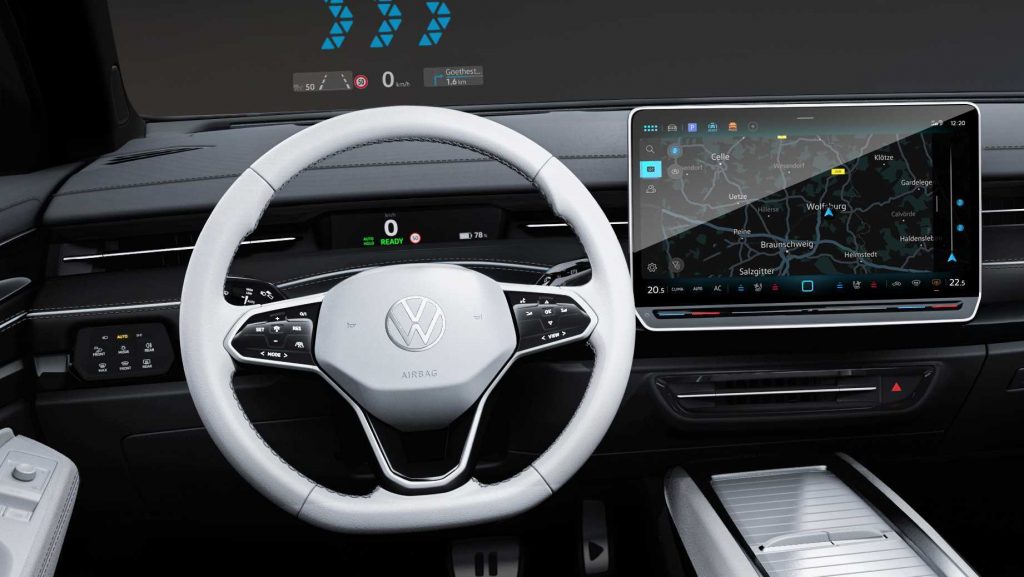
VW says it has improved the user experience by responding to customer feedback before throwing in a host of innovations that will be found as standard including a new display concept, an augmented reality head-up display, a 15-inch screen, digitally controlled air vents and illuminated touch sliders.
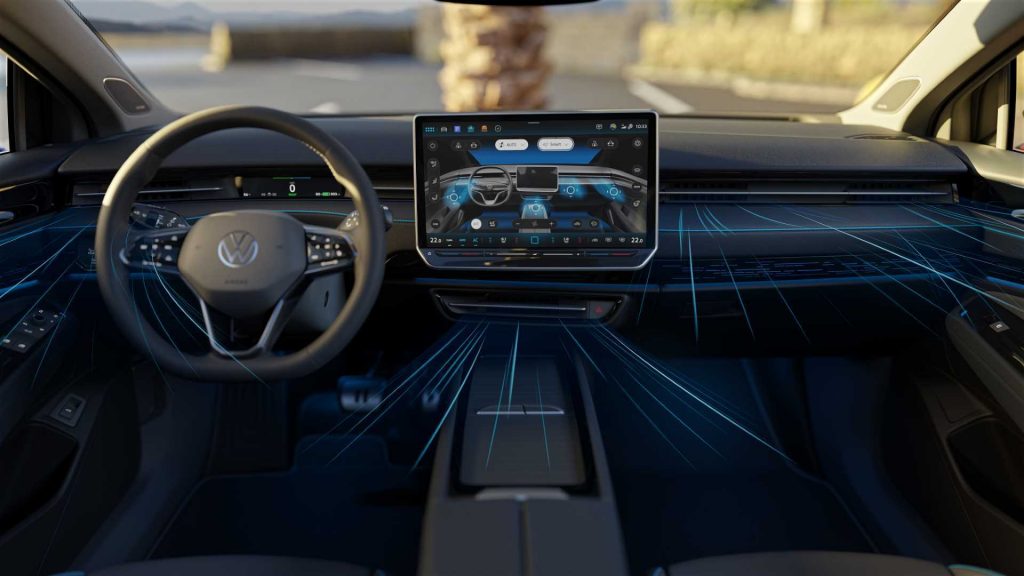
The new climate control concept comes with intelligent vents that offer a number of functions.
Other than it sporting a new design for its “Smart Vents” it will have the ability to detect an approaching keyFOB, to which it will begin to cool/heat the interior based on the driver’s previous preferences.
The newly designed vents are said to control the flow of air and help to dynamically distribute the air over large areas as quickly as possible or be directed straight to the body of a passenger or simply provide indirect ventilation.
Such functions are said to be visible at all times on the new 15-inch display which can be activated and saved individually for each user.
Special requests can be activated using voice commands by saying “Hello Volkswagen, my hands are cold!”, to which the ID.7 will respond by engaging the heating function of the steering wheel. Meanwhile, warm air will be streamed directly towards the driver’s hands.
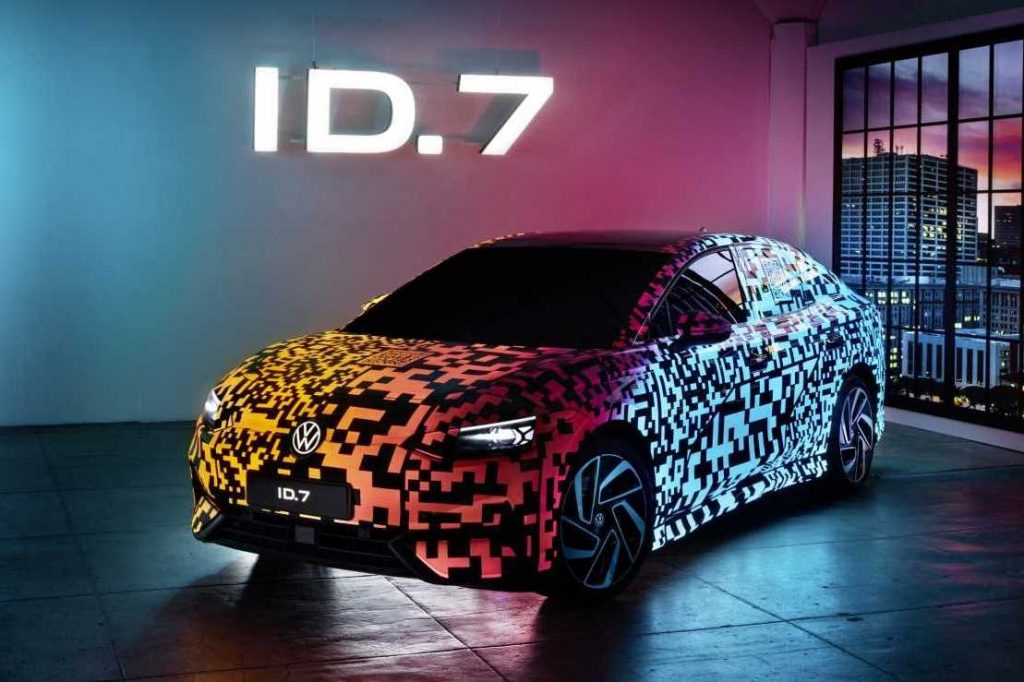
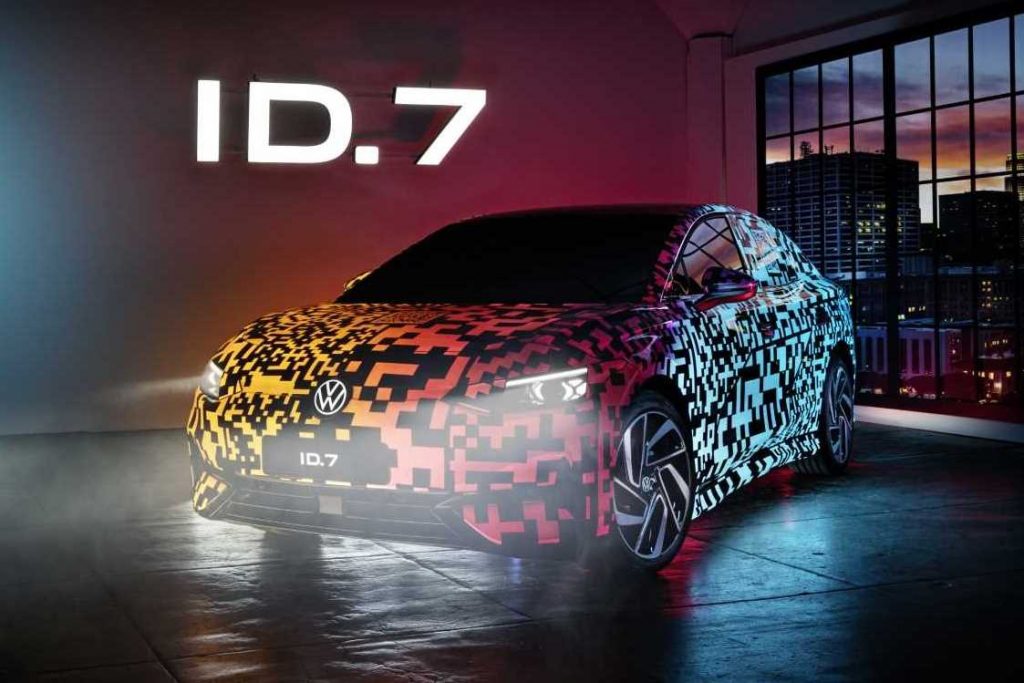
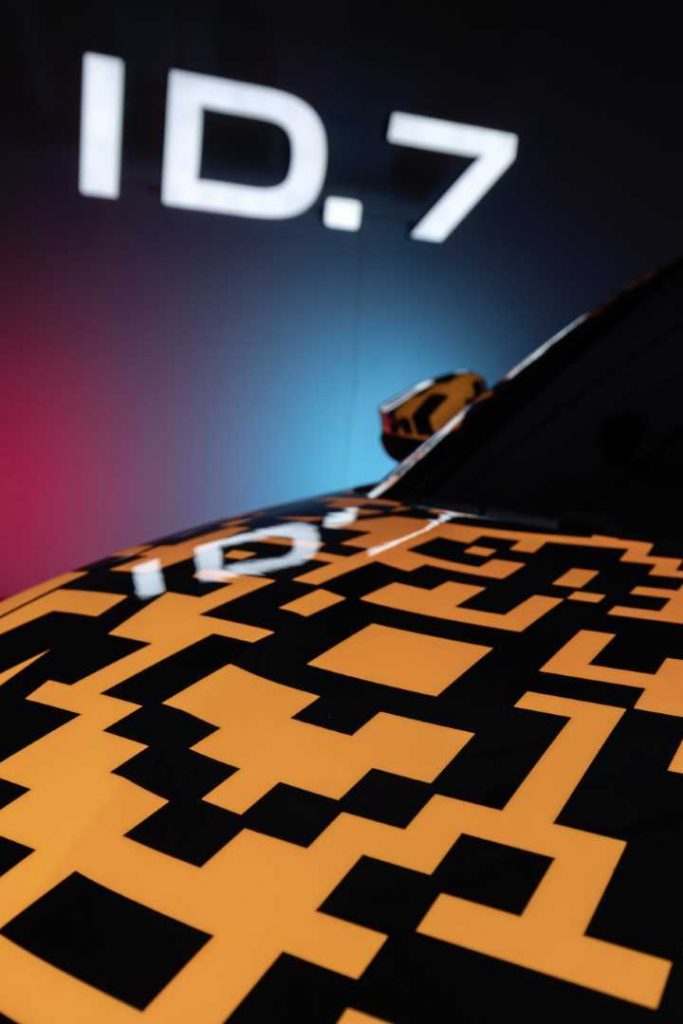
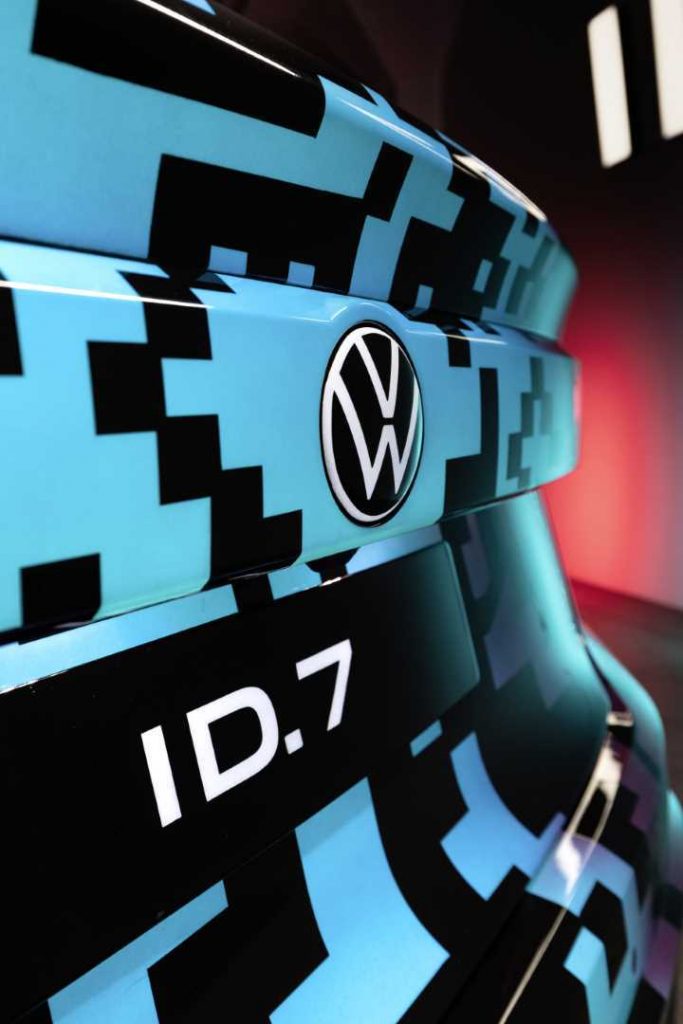
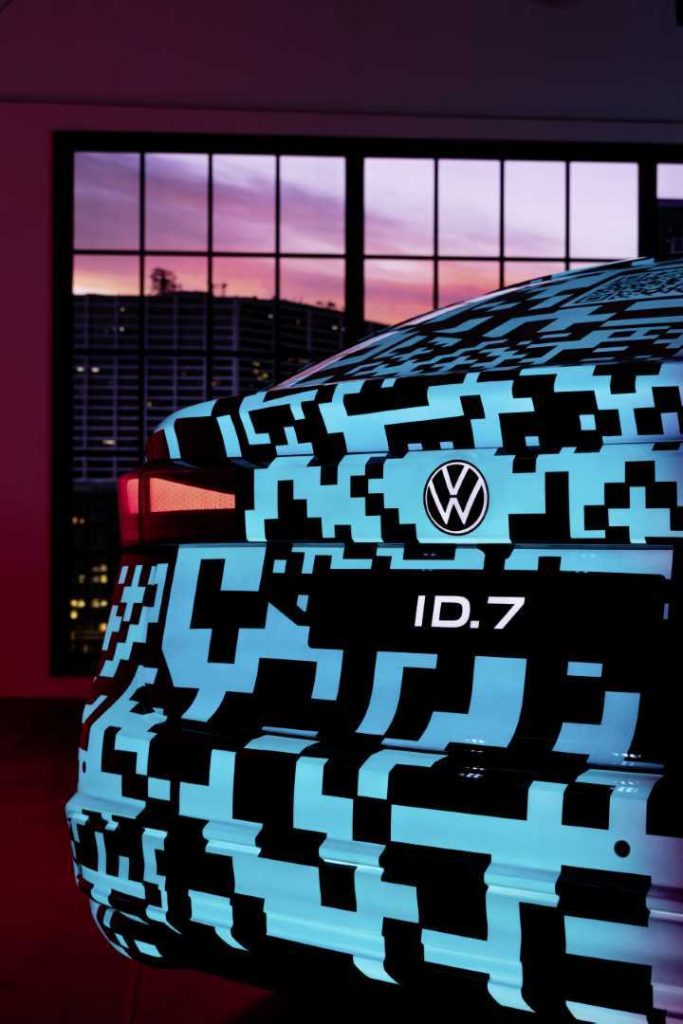
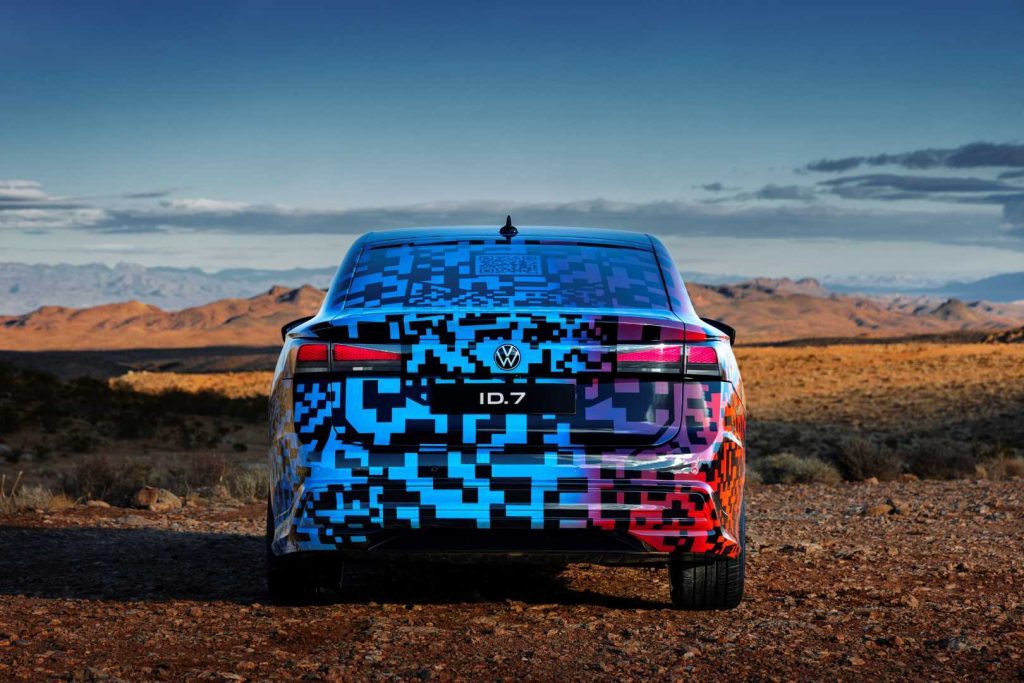
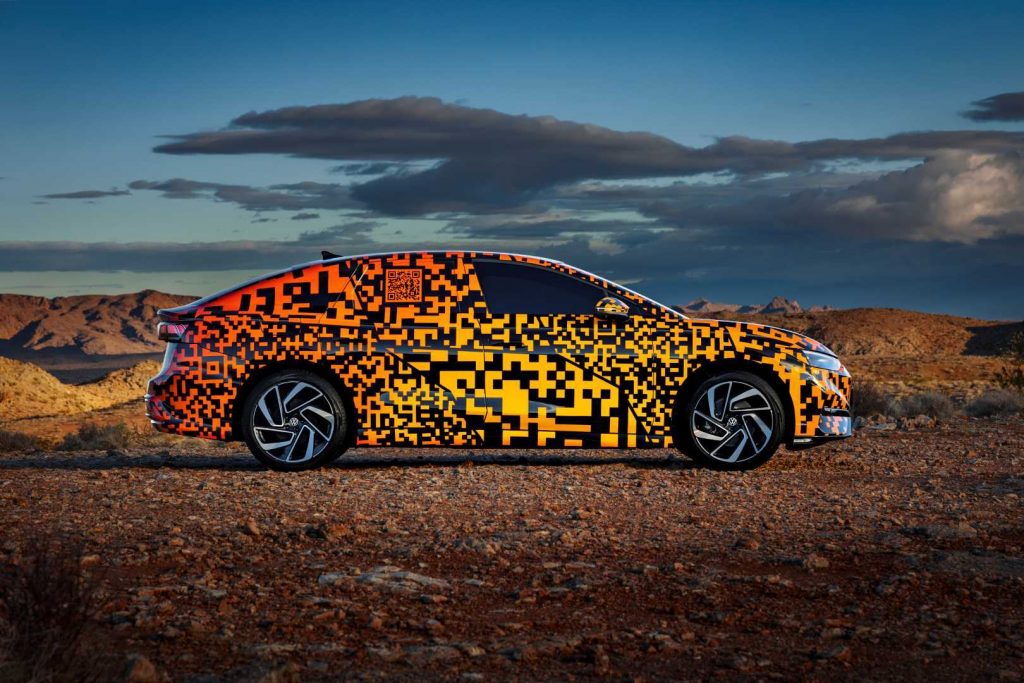
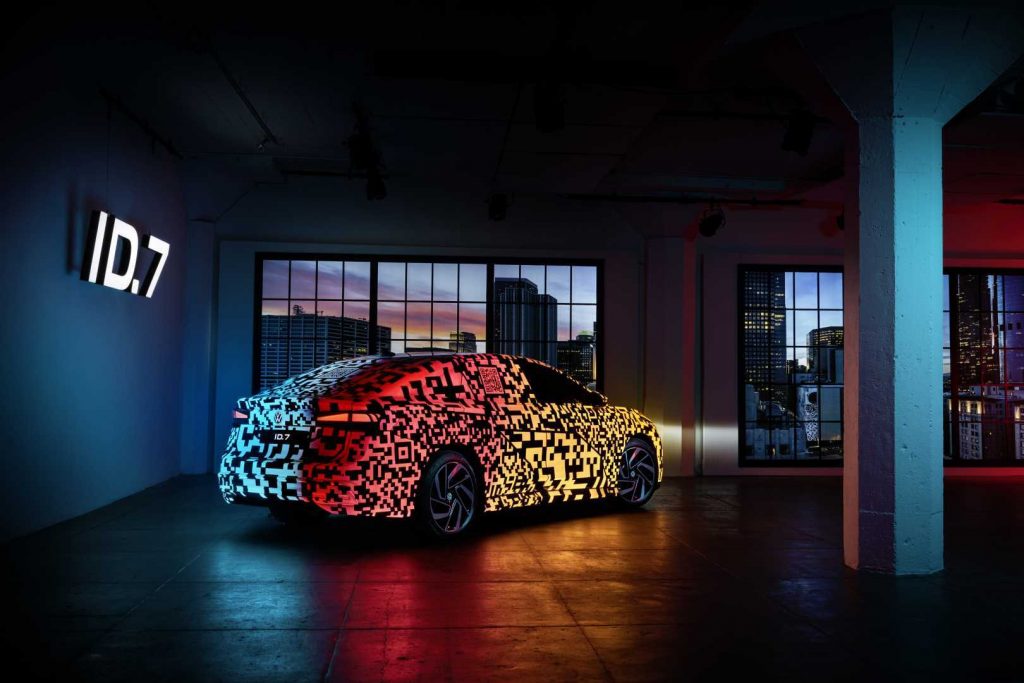
Although the ID.7 has been clad in what seems to be the usual colourised digital camo, the carmaker has gone through many steps to bring this about. Try 40 layers of paint to bring this digital paintwork to life which happens to also light up the ID.7 interactively. Some of the layers are said to be conductive while others have insulating properties.
A total of 22 areas of the vehicle can be controlled separately and are electrified below the top layer of paint (electroluminescence) so that they light up. If all this is connected to a sound system, the rhythm is visualized by the illumination of individual areas.
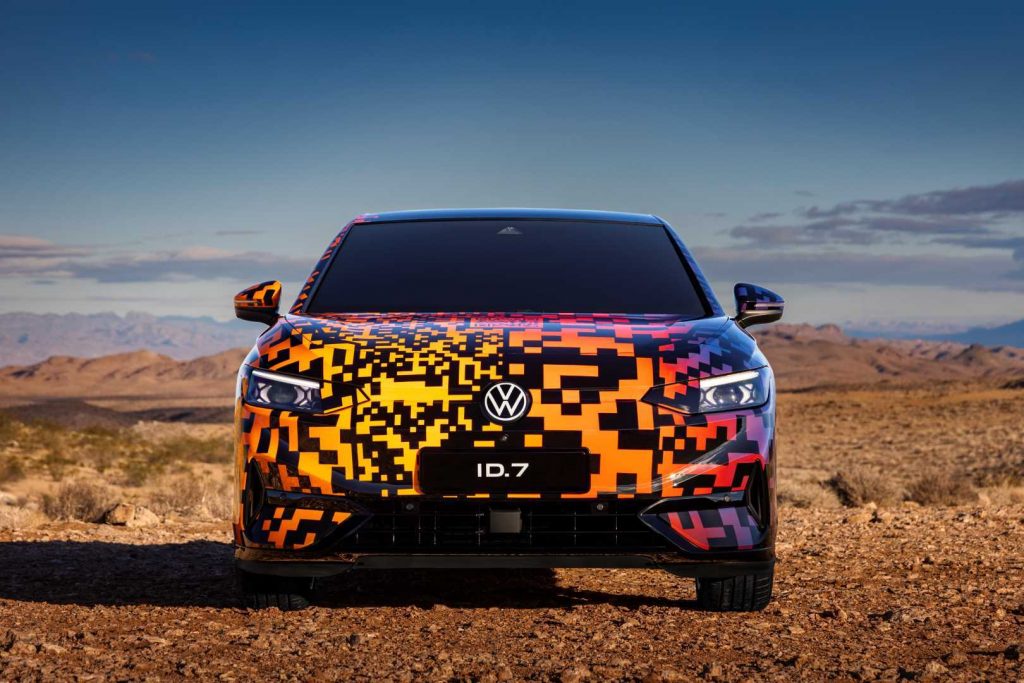
The QR codes on the hood and on both sides provide an interface between the physical and digital worlds. The entire camouflage also takes the QR code theme further and thus hides the contours of the final production vehicle.
The ID.7 has been designed with aero-efficiency in mind. For Starters, there are air intakes located at the flanks of the bumper’s lower section that direct air down the sides of the vehicle towards the rear to form an air curtain that helps calms airflow down the sides of the vehicle.
The roof takes on a coupe-like slope towards the rear and contributes to what the company describes as “good” drag coefficient.
All that simply helps to contribute towards the company’s estimates that the ID.7 will be able to travel up to 700km on a single charge (based on the WLTP cycle).
Although VW might be seen to be launching what seems to be another electric vehicle (EV), the company declared that its ID.7 will not just be another expansion of its EV family, but rather an expansion into the premium part of the mass-market segment.
Meanwhile, it also promises of a spacious interior that feels more like a luxury sedan thanks to its 2,969mm wheelbase for its 4,940mm-long body – making it about 76mm longer than the Arteon.
This all-electric sedan is planned to be launched in three primary markets including China, Europe and North America.
The ID.7 for the European market will be produced at the Volkswagen Emden plant, making it the second MEB vehicle produced there, after the ID.4.
“With the new ID.7, we are extending our electric model range into the upper segments. The sedan will offer top-class technology and quality. The ID.7 is one of 10 new electric models that we are planning to launch by 2026. Our goal? To deliver suitable products for our customers in every single segment,” said Volkswagen Passenger Cars CEO Thomas Schäfer.